Showing posts with label focal length. Show all posts

Tuesday, August 25, 2020

Photography Article Top 5 Informational Photography Posts on Boost Your Photography|Photography Artist Statement

http://www.boostyourphotography.com/2014/01/top5-aboutphotography.html

This second post in our Top 5 countdown of Top 5 posts will feature the Top 5 Informational Photography Posts from 2013 on Boost Your Photography. (Yesterday's post was The Top 5 Travel Photography Posts of 2013.)  Many of these posts were featured as part of our series geared toward beginners, variously subtitled "Things Experts Forget to Tell You" or "Things that Your Forgot You Had to Learn." While many of these posts are geared towards photographers who are first learning how to use their DSLR camera, even those of us more experienced photographers may find something of value.

#5: Keeping Your Camera and Sensor Clean

http://www.boostyourphotography.com/2013/08/clean-camera.html

Camera protection is a seriously essential, and regularly unnoticed, part of pictures. Your digital camera is continuously exposed to specific situations, weather, and circumstances, all of which could negatively effect your pics down the line. Read about Keeping Your Camera and Sensor Clean to learn the way excellent to guard your self and your digicam, and a way to address the predicted and unexpected hazards alongside the manner.

#four: All approximately Exposure

http://www.boostyourphotography.com/2013/06/all-about-exposure.html

This component collection on exposure included All about Exposure and More on Exposure: a way to restoration common exposure problems. Exposure is a complicated topic, and whole books were written about it. (One such book, Understanding Exposure, become blanketed in my list of favored images books and authors.) These posts provide a thorough advent to the topic of exposure, along with a discussion of accurate and innovative exposure. You can even find recommendation for purchasing the right publicity in a given circumstance and hints like the usage of the AE Lock button or bracketing your pictures (as shown in the moon shots, above).

#3: How Long Does Your Camera's Battery Last?

http://www.boostyourphotography.com/2013/07/battery-life.html

Your camera's battery is important. Do you know how lengthy your camera's battery will final? This publish explains a simple technique for locating out (hinted at within the pics above), as well as realistic advice for keeping battery lifestyles and maintaining your batteries running properly for a long term.

#2: Why Won't My Lens Focus?

http://www.boostyourphotography.com/2013/05/why-wont-my-lens-focus.html

Focus changed into one of the troubles I struggled with at once once I commenced the use of my DSLR for the first time. Turned out that I become missing out on a few very simple statistics approximately lenses and focusing that might have cleared up quite a few my problems without delay. This put up explores the importance of focusing, wherein to recognition, and why your lens may not focus whilst you suppose it need to.

#1: Aperture and the F/Stop Conundrum

http://www.boostyourphotography.com/2013/09/aperture.html

The primary Informational Photography Post on Boost Your Photography was Aperture and the F/Stop Conundrum, the primary in a sequence of four posts about aperture. The rest of the posts protected What an Aperture of F/1.Eight Can Do for You, What an Aperture of F/22 Can Do for You, and the Middle Range Apertures: f/8 to f/11.

For a completely long time, I discovered the language used round aperture to be very perplexing: the bigger vs. Smaller, wider vs. Narrower, shallower vs. Wider intensity of field all served to deepen my confusion as opposed to my information. This collection of posts sought to relieve this confusion and provide an explanation for the f/forestall conundrum once and for all.

Missed one of the Top 5 Top five posts?

  • Top 5 Travel Photography Posts
  • Top 5 Posts with Instant Inspiration Ideas for Photography
  • Top 5 Guest Posts on Photography
  • Top 5 "How To" Photography Posts

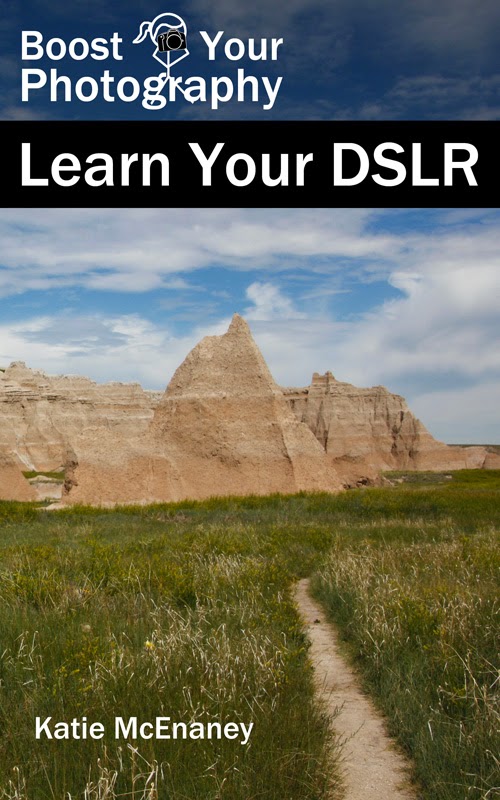
Boost Your Photography: Learn Your DSLR is now available from Amazon. Get the most out of your digital camera with practical advice about the technical and innovative components of DSLR photography a good way to have you taking stunning images right away.

Tuesday, July 14, 2020

Photography Article Zooming vs. Cropping: perspective in photography|Photography Artist Statement

One of the most primary selections while taking a image is what to encompass in the frame, and infinite books, articles, and blog posts were written approximately composition within that frame. But one frequently neglected factor of this dialogue is the distinction among zooming and cropping whilst attending to the final composition.

A wide shot in the system of being cropped all the way down to a closer-in shot.

Zooming, of path, is changing the length of your lens to create the final composition (whether or not on a point-and-shoot, DSLR, or any digital camera in-among). Zooming takes place inside the field, at the same time as you are taking a picture. Cropping, however, is changing the photo itself, after it's been taken, via choosing a smaller segment of the original picture to make the very last image. Zooming happens together with your lens or with your feet; cropping occurs for your computer.

The difference subjects for numerous reasons. One is that cropping decreases the amount of pixels on your final image, that can impact how nicely you may blow up and display or print the very last picture. The 2nd is that the way you choose your zoom (based totally on wherein you stand) affects the attitude of the very last photograph, even as cropping does no longer. Wide attitude lenses (or wide focal lengths) tend to make bigger and warp attitude, whilst zoom lenses (and narrower focal lengths) have a tendency to compress a scene and make items seem highly closer collectively. These exceptional focal lengths can significantly exchange the angle of your scene.

Why does changing angle depend? Let me illustrate with an instance.

I currently retired my car. After fifteen years and nearly a hundred and fifty,000 miles, it was time to begin critically thinking about a extraordinary automobile before the next winter set in. Decisions were made, and the weekend got here to say goodbye to my old automobile. As a goodbye, I determined to take it for a last spin and photo shoot down by the lake.

I desired to take a 'automobile portrait' with the lake and timber because the backdrop, so I decided to take a sequence of shots at special zoom lengths to see which one supplied the first-rate attitude. To accomplish this, I had to zoom with my lens in addition to my toes. For the primary photo, at 18 mm (the widest focal length for the lens I was using), I turned into status very close to the automobile, barely in the road itself. For the 35 mm shot, I needed to again as much as simply across the road. This gave me the identical compositional placement because the first shot (with the car the same approximate size in the frame). Then I repeated the process of backing up and taking any other photo at 50, a hundred, a hundred and fifty, 200, and 270 mm (the most zoom amount for the lens I become using).

Zooming Vs. Cropping: perspective in photography | Boost Your Photography
Impact of converting focal duration (and backing up) on perspective.

This collage shows six of those pics, every shot on the identical ISO (a hundred) and aperture (f/sixteen). The top row of pictures turned into shot at a shutter velocity of one/one hundredth of a second, and the bottom row of shots become shot at 1/60th of a 2d (to make the darker tree backdrop a bit lighter). The variations between each of the shots are purely a end result of the converting perspective from every of the exceptional focal lengths.

Comparison of 18 mm and 35 mm focal lengths on angle

The differences are pretty apparent when comparing the widest shot, 18 mm, with the next widest shot, 35 mm. The 35 mm period is considered to be most much like the view and attitude that is captured by using our eyes, and this photo suits how the car 'evidently' seemed to me at the time. The wider 18 mm view creates distortion in nearer items, which exaggerates the traces of the the front of the car specifically. This view of vehicles is regularly used to lead them to seem huge, grand, or implementing, as the auto appears to dominate over the wide views inside the heritage.

This distortion of objects at wide focal lengths can create issues when photographing photographs. While a distorted look is common in images of motors, a huge perspective and up-near photo of someone is far much less flattering and has a tendency to over-emphasize functions, making noses appearance big or faces appearance huge. This is why lens inside the 85-a hundred and twenty mm lengths are frequently known as 'portrait' lenses: these focal lengths provide a angle of the human face this is considered more flattering.

But returned to the discussion of cropping. While I can crop an photo I took from farther away to make it seem like I became status towards that object or using an extended zoom, cropping cannot mirror the adjustments in perspective from absolutely status toward that object.

Same image report, as at first shot (left) and cropped down (right)

The image on the left became inquisitive about the 18 mm focal period while I turned into status at the identical vicinity as the 270 mm model with the auto in the same relative function inside the body as in the collection above. The image on the right turned into cropped from the photograph at the left to create the identical relative function and length of the automobile within the frame.

Comparison of 270 mm shot (left) and 18 mm shot from identical area, cropped (proper)

This image compares the zoomed in shot at 270 mm (on the left) with the shot cropped in version from the 18 mm to imitate the composition of the 270 mm shot (on the right). The loss of pixels and therefore clarity and detail is evident between the two. The 270 mm shot is 4752 x 3168 pixels, while the cropped version is only 357 x 238 pixels. You should also notice that the perspective between the two shots is unchanged. Cropping in a shot does not change the perspective of the shot. Only zooming in or out for the shot and moving your feet changes the perspective.

Comparison of 35 mm and 270 mm focal lengths on angle

Standing in one location (such as where I took the 270 mm shot) and changing the zoom on your lens will make photographs that are different. It will not, however, make photographs that have any differences in perspective. The relative locations and impact of the foreground and the background will remain the same. If you want to change the perspective, if you want to emphasize one object over another or influence their relationships to each other, you will need to change your zoom and move your feet.

Moving your feet can effect your images in many ways. Read up on aperture and the way transferring your toes can improve your pictures here: Remember the Background and Move your Feet.

Saturday, July 11, 2020

Photography Article Learn Your Camera Lens: the lens itself|Photography Artist Statement

This is every other article in an occasional collection aimed at beginners called ?Things Experts Forgot to Tell You? Or ?Things that You Forgot you needed to Learn.? Read more of this collection here.

The previous article about camera lenses supplied a top level view of the naming conventions of digital camera lenses in addition to a translation to apply in interpreting all the numerous abbreviations in lens names. This article will walk you through the primary features of a DSLR digital camera lens and provide an outline of every of the crucial labels, switches, and functions.

Introduction to a Camera Lens

There are many important pieces of information that you will find written onto the body of your camera lens. The first is the name of the lens itself, such as Canon EF-S 18-55 mm f/3.5-5.6 IS II SLR (below on the left) or Nikon 18-55mm f/3.5-5.6G AF-S DX VR Nikkor Zoom Lens. Read Camera Lenses: What’s in a Name? for a more detailed treatment of camera lens names.

These are my first two lenses, bought as part of a kit with the Canon T1i frame. You can talk over with these snap shots to find the features described beneath, however it's miles greater beneficial if you have your own lens(es) in the front of you to refer to.

A 2d piece of records written onto the lens is the focal length. This is often in the call of the camera in addition to written on the barrel of the lens, often near where the lens attaches on your digital camera body. A prime lens could have simply one focal period (along with 50 mm), while a zoom lens will list a number of focal lengths (together with 18-55 mm).

If you have got a zoom lens, the biggest adjustable cylinder on the lens' frame will assist you to alter the focal duration. You will see quite a number focal lengths indexed, frequently from widest to narrowest, at the cylinder itself. Rotating the cylinder all the manner in a single course will come up with your widest focal period (which includes 18 mm), even as rotating the cylinder all the manner within the other direction will provide you with your narrowest focal duration (including fifty five mm). Whether this rotation is clockwise or counterclockwise depends on the producer of your lens. If you look down at your camera lens at the same time as rotating, you will see a few form of mark (white line on Canon lenses) that factors to which focal period you have presently decided on.

When using a modern-day lens, this records approximately focal duration could be recorded by your digital camera and saved as part of the picture. If you proper-click on an picture file in Windows and select 'Properties,' you may pick out the 'Details' tab and see all the EXIF records stored together with your report, inclusive of the focal length that the lens turned into set to on the time. To locate the identical records on a Mac, you need to control-click at the photo and select 'Get Info.'

If you purchase an extended zoom lens (with a reasonably huge variety), then it could come ready with a 'lock' transfer. This switch allows you to lock the lens in its maximum compact position (frequently the widest aperture). This is specifically beneficial when wearing around your digicam, because it prevents the whole lens from randomly zooming out to its longest length. A lock makes no sense on a prime lens and is not continually a characteristic on starter lenses.

Learn Your Camera Lens: part 2 the lens | Boost Your Photography

The smaller adjustable cylinder on your digital camera lens is the focal ring. If your digital camera is ready to autofocus, then the digital camera will direct the lens to adjust this ring until it achieves cognizance. If your digital camera is set to manual focus, then you'll rotate this ring in order to attain cognizance. Older lenses or those supposed for manual cognizance, may also have written indicators at the focal ring that tell you the approximate distance (generally in feet for a US manufactured lens) to the item in consciousness. On the Tamron lens above, you may see that the lens is presently centered to infinity however can go down to zero.Forty nine meters or 1.6 ft.

Speaking of manual attention and autofocus, there's an critical transfer that controls those, which is located on the camera lens. It is usually a little push switch with labels: AF (autofocus) and MF (guide awareness). You should always leave this transfer driven over to AF unless you have got a cause for the usage of manual awareness. There is usually an indicator in your digicam's rear display on the way to permit you to recognize when you have switched your lens into guide recognition mode.

The 2d activate many cameras is for picture stabilization (additionally called vibration control or vibration reduction) and may be switched either on or off. In maximum instances, you will need to leave this grew to become on. The only time you would possibly want to turn off the stabilization characteristic is in case you are the usage of a tripod. Because a stabilized digicam 'expects' some form of movement, it may surely upload motion in your shot if you are using a tripod to preserve the digital camera perfectly consistent. If you do flip stabilization off when the use of a tripod, I endorse turning it back on again right whilst you are finished.

There is some other important indicator related to awareness that is written for your digicam lens. This is called the minimal focusing distance, and it is the wide variety (in toes and meters) that follows the little tulip flower symbol. The minimal focusing distance tells you the closest you may be for your subject whilst nevertheless being able to cognizance. If you move in the direction of your difficulty, your camera can be unable to find recognition and the autofocus will hunt around (and on occasion make odd sounds. Read greater in Why Won?T My Lens Focus?). This is some other one of those extraordinarily useful pieces of facts that frequently do not get defined while you purchase your first camera and lenses and knowing it can prevent quite a few frustration and confusion down the road.

A final useful indicator to your camera lens is the diameter (in millimeters) of the lens. This dimension is indicated with the ? Symbol. You will want to recognize the diameter of your lens with a purpose to purchase the appropriate filters. (More on filters in the next article on accessories.)

Summary: about digicam lenses

You can learn a lot from your lens, and there are several important features and adjustments available. Your lens can often do more than simply focus or zoom in and out. Now that you know about features like the 'lock' mechanism or the auto/manual focus switch, you may find you are using them more often. The last article in this short series on lenses will describe some of the most common accessories for lenses and which you may need.

Want to research extra?Boost Your Photography: Learn Your DSLR is now to be had from Amazon. Get the most from your digital camera with sensible advice approximately the technical and innovative elements of DSLR photography in order to have you taking beautiful pix right away.

Wednesday, June 24, 2020

Photography Article Top 5 Posts about Camera Settings|Photography Artist Statement

In honor of the New Year, Boost Your Photography will spend the month of January featuring collections of top posts across a variety of topics. This opening post will cover top posts explaining specifics of camera settings. Other top posts coveraperture,exposure,phone photography,DIY photography hacks,composition,lenses and accessories,top photography ideas, andmacro photography.

Top Posts approximately Camera Settings

  • Shutter Speed.Shutter Speed: an overview and Creative Ideas Using Shutter Speed. These two posts provide a comprehensive overview of shutter speed in photography. The overview post provides a quick overview across the full range of possible shutter speeds and includes a useful visualization graph. Creative Ideas takes this a step further by providing how-to directions for a variety of shutter-based photographs.

  • White Balance.What the ... White Balance and Strategic White Balance. What the ... White Balance provides an introduction to white balance and the most common white balance presets available on your camera. Strategic White Balance explains how to creatively manipulate white balance to improve your photographs.

  • Overall Recommended Settings.Missed the Shot? Remember Camera Zero. Never miss a shot because your camera settings were off. Get in the habit of re-setting your camera to the same default settings each time you finish shooting. Read the why behind my recommended settings in Missed the Shot? Remember Camera Zero.

  • Focus.Why Won't My Lens Focus? and Deciding Where to Focus. Find out why your lens might not be focusing correctly and the kinds of situations that can lead to focus issues. Read Why Won't My Lens Focus? Once you have those basics down, Deciding Where to Focus will help you nail focus in the right place every time.

  • Depth of Field.Depth of Field: it's more than just aperture. Depth of field is the area of the photograph in focus, and this post will highlight all the various components of photography that can impact the depth of field in your final photograph.

Want greater super ideas? Follow Boost Your Photography on Pinterest: Boost Your Photography

Boost Your Photography: Learn Your DSLR is now to be had from Amazon. Get the most from your digicam with practical advice approximately the technical and creative factors of DSLR pictures so as to have you ever taking stunning photographs right away.