Showing posts with label Book Club. Show all posts

Friday, August 28, 2020

Photography Article Announcing the Boost Your Photography eBook!|Photography Artist Statement

I am excited to share with you the big news: my new eBook, Boost Your Photography: Learn Your DSLR  is now available from Amazon! Carrying the style and tone of the Boost Your Photography web site into a full-scale book, Learn Your DSLR will help you get the most out of your camera.

I wrote this book to address my concern that most introductory DSLR books overlook basic skills that many long-time photographers simply take for granted. Boost Your Photography: Learn Your DSLR is written with a beginner's perspective in mind and provides clear, detailed explanations of DSLR photography basics. I've also included many techniques and tips that more experienced photographers will appreciate. All levels of photographers will benefit from the "Apply It Now" activities that will make in immediate impact in your photography.

You can download a sample, read the beginning through Amazon's "Search within the book" feature, or purchase your own copy for only $4.99. Containing more than 50 full-color photographs, you can read Boost Your Photography: Learn Your DSLR on any device, including tablets, smartphones, and computers through the (free) Kindle app.

I am so excited to share this e-book with you! If you want what you study, please don't forget writing a assessment on Amazon and sharing your thoughts.

Thursday, August 27, 2020

Photography Article Favorite Photography Books and Authors: part 1|Photography Artist Statement

I love reading pictures books and blogs, and I determined that there are positive authors I go back to again and again. This post is a -element collection about some of my favorite photography authors and the books all aspiring photographs need to read: first, authors who push you past with bigger ideas approximately images, composition, and artwork, and 2nd, on authors who give an explanation for the info and technical aspects of photography.

Favorite Photography Books and Authors Part 1: Big Ideas | Boost Your Photography

Michael Freeman

Michael Freeman is an wonderful photographer and trainer. He has notion so hard and so deeply approximately photography, that his insights constantly challenge me in the approaches that I consider and method pictures.

The first e-book of his that I owned become The Photographer's Eye: Field Guide (the critical guide for travelling with your digital SLR digital camera). It is tiny, compact, and bursting will beneficial pointers and advice. There are lots of practical considerations about cameras and journey, however the maximum treasured sections for me had been the closing three: Appreciating Light, Subjects, and Themes. What caught my interest while first analyzing turned into how interrelated these 3 classes had been however how useful it turned into to recall each one at a time.

Only later did I realize that this ebook became a much smaller model of his masterpiece, The Photographer's Eye: Composition and Design for Better Digital Photographs. This e-book has been currently updated with a 'graphic manual' model this past 12 months.

What I admire in particular approximately Freeman's work is the quantity of clarification and analysis that move into his recognize of images and composition. He can destroy down and interpret a photo in methods that allow every person to recognize what he is seeing and what makes that photograph effective. He continually demanding situations me to push myself in addition and to be extra planned and thoughtful in my photography and composition. I suppose he has training for photographers of all levels and mainly for those who may need a brand new push or inspiration of their work.

Freeman Patterson

I found out about the work of Freeman Patterson through a reflection on him by David DuChemin on his web site,davidduchemin.com. (I highly recommend subscribing to his blog posts as well.Craft & Vision has an ever-expanding line of photography books, eBooks, and magazines, some of which are available to download for free.)

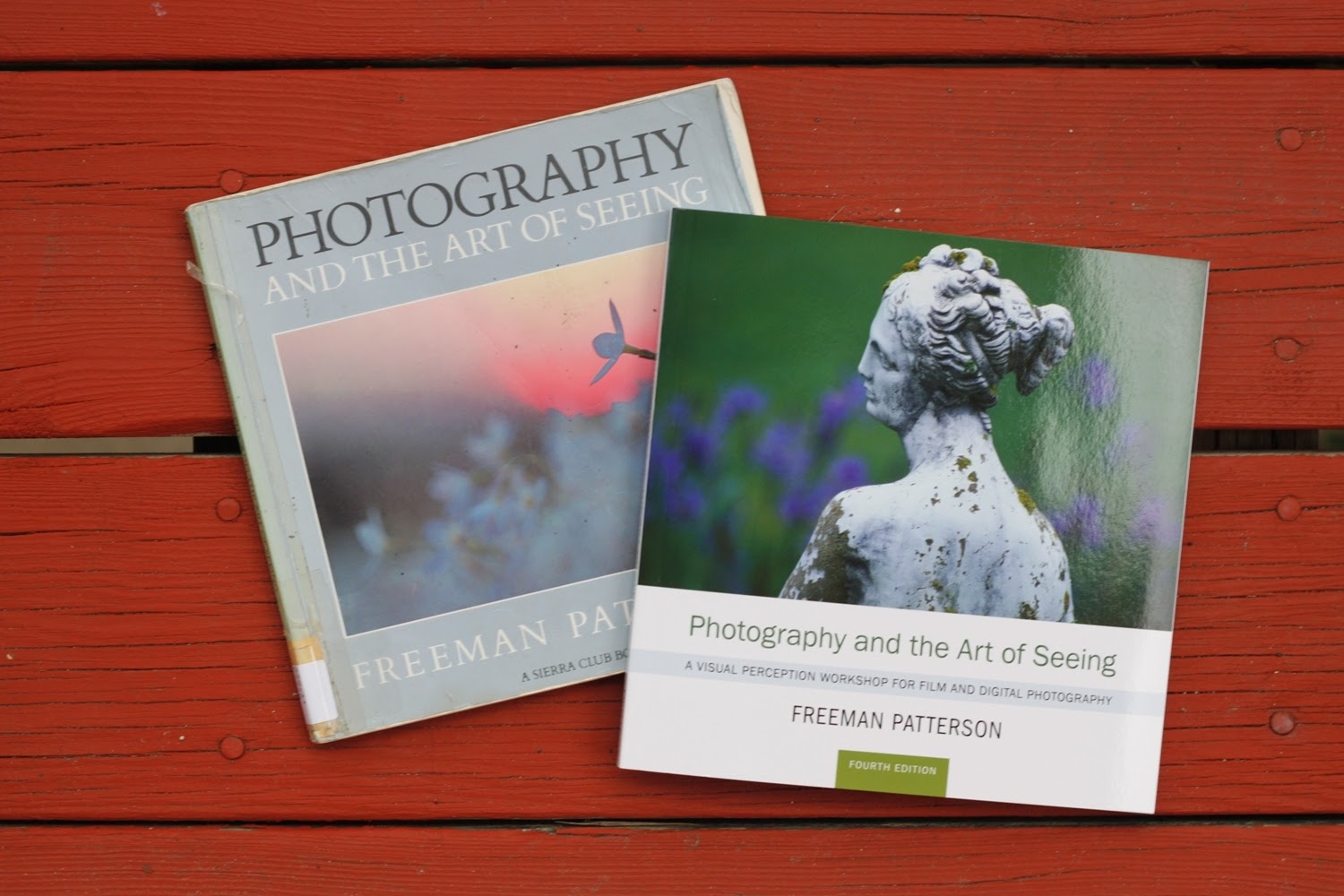
Patterson's book, Photography and the Art of Seeing, was the text chosen for our first ever Photography Book Club, hosted jointly through this blog and on the web site 365Project.org. For the month of August 2013 a group of about thirty photographers spent the month working through four week-long challenges, based on the readings, photographs, and exercises found in this book.

Photography and the Art of Seeing focuses on the importance of observation, imagination, and expression in photography. Patterson integrates activities and advice into the different sections, to encourage you to go out and apply the ideas in the book directly to your own photography. He also ends each section with a selection of photographs to demonstrate how he puts his own ideas into practice. Those of us who participated in the Book Club all felt that this was a book that could stretch any photographer and inspired us to see and try new things in our photography. A great book if you are looking to be inspired to see in a new way.

You can read more about the Photography Book Club here:

  • Introduction to the August Photography Book Club
  • August Photography Book Club: week 1
  • Reflections on Week 1
  • August Photography Book Club: week 2
  • August Photography Book Club: week 3
  • August Photography Book Club: week 4
The next post in this series will cover authors that do a great job of explaining more about the technical sides of photography.

What about you? Do you have a favorite photography author or book? Feel free to share in the comments below.

Boost Your Photography: Learn Your DSLR is now available from Amazon. Get the most out of your camera with practical advice about the technical and creative aspects of DSLR photography that will have you taking beautiful pictures right away.

Photography Article Favorite Photography Books and Authors: part 2|Photography Artist Statement

This is the second in my two-element series about a number of my preferred pictures authors. The first element focused on authors who recognition on broader thoughts about photography, composition, and art. This post will discover authors who provide an explanation for more of the technical side of photography.

Favorite Photography Books and Authors Part 2: Technical Side | Boost Your Photography

Bryan Peterson

Exposure is a complicated topic, and the several posts on this site about exposure have only begun to scratch the surface (All about Exposure andHow to Fix Common Exposure Problems). Bryan Peterson's Understanding Exposure, now in its third edition, is a classic photography book. It is a combination of a technical 'how to' book about exposure and how to create the photographs that you want along with an inspiring collection of images and ideas that will inspire you and your photography.

Peterson breaks aside the exclusive components of exposure and consists of majors sections on aperture, shutter pace, and mild. There is also a final segment on filters and other extra worried techniques and accessories. His clean reasons and simple instructions will help make clear this tough and oft-perplexing subject matter.

Bryan Peterson additionally has aseries of motion pictures and articles sponsored by using Adorama. His "You Keep Shooting" series is complete of thoughts and idea for precise styles of styles and pictures. If you are seeking to study a particular method or need a brand new idea, this is a excellent resource.

Scott Kelby

Scott Kelby is a well-known photographer and author of many photography and Photoshop books. He also has a blog at scottkelby.Com. His Digital Photography collection, now at 4 books, covers commonplace images topics and situations, and it is an first rate 'a way to' collection.

Kelby demystifies images with sections like "Pro Tips for Getting Really Sharp Photos" or "Shooting Weddings like a Pro." Each e-book ends with what Kelby calls "Photo Recipes," which are the specific settings or strategies had to take a image similar to his example. I discovered this section specially beneficial after I become first beginning out, as his 'backstage' insights make these forms of photographs possible and attainable. The books are also written with a completely unique sense of humor, including section introductions that are humorous, off-kilter, and typically unrelated to something inside. Certainly an opportunity to the dry, sleep-inducing tones of some educational books.

Kelby is likewise a well-known Photoshop expert and offers workshops, books, and advice approximately the usage of Photoshop for photography. For those of you interested in publish-processing, you could discover his sources useful. He has written a sequence particular to each new version of Photoshop, so you can discover a book tailored to exactly the software which you are the use of.

Summary

If you're seeking out some images reading this vacation season, you cannot pass incorrect with books with the aid of Michael Freeman, Freeman Patterson, Bryan Peterson, or Scott Kelby. Each will let you improve and enhance your pictures, whether or not it is thru inspiration or compositional advice, unique preparation in a brand new technique or strategy, or assist together with your post-processing.

Do you have a favorite writer I ignored? Share your thoughts or hyperlinks within the remarks beneath.

Boost Your Photography: Learn Your DSLR is now to be had from Amazon. Get the most out of your camera with realistic advice approximately the technical and creative components of DSLR pictures so one can have you ever taking stunning photographs proper away.

Sunday, August 23, 2020

Photography Article Black and White Book Club: Michael Freeman|Photography Artist Statement

Everyone is invited to join in the Black and White Book Club (and Flash of Color February) for the month of February. The idea is to join a group of photographers in reading a relevant photography book during the course of a month, while also applying the techniques and strategies of the book to your daily photography. There was a great turnout and interest for our last book club in August, and you can read the weekly posts and updates about it, if you are curious (Overview about the August Book Club,Week 1,Reflections on Week 1, Week 2,Week 3, and Week 4.) We are also continuing in the tradition of Flash of Red February, started by @olivetreeann last year, and you can see examples of the finishers' monthly layouts here. (Mine is below.)

http://www.boostyourphotography.com/2014/01/bookclub.html

For the month of February, we will be reading either Michael Freeman's The Complete Guide to Black & White Digital Photography or Michael Freeman Black and White Photography Field Guide. (The Field Guide is a slightly slimmed down version of The Complete Guide, but the vast majority of the text and examples are the same, just in a smaller, more conveniently-sized package. If you really want to stare at the subtle differences in some of the example images, however, I recommend the larger size of The Complete Guide.) You do not have to read the book to participate, but you will get much more out of the experience if you do. Your local library may have copies of the books (mine did), or they are available from many sites online, such as Amazon.

http://www.boostyourphotography.com/2014/01/bookclub.html

The Book Club will be broken down into weekly sections, and there will be a detailed post each week with thoughts and summaries about the relevant book sections and their possible applications to your photography. The following is an overview of the ideas and topics covered:

  • Week 1, Feb. 1-2: Black and White Photography as Fine Art – fine art or abstract photography
  • Week 2, Feb. 3-9: Black and White Photography as Normality – still life, landscape, street, portrait, architecture, or journalism / documentary photography
  • Week 3, Feb. 10-12 and 14-16: Elements of Visual Design – thinking about shape, structure, tone, volume, form, and texture
  • Feb. 13th: Flash of Color February – an image processed with selective color to bring out a specific color
  • Week 4, Feb. 17-23: Creative Choices in Exposure – exploring over- and underexposure, high key, low key, high contrast, and low contrast
  • Week 5, Feb. 24-28: Putting it All Together – a final week to go back to your favorite or most challenging ideas or styles of black and white photography. You can also explore topics not covered in the weeks above, such as Grain or High ISO photographs, HDR, Tone Mapping, and Adding Tints.

Section Two of the books, Digital Monochrome, will not be included during a specific week. This section deals intensively with the processing side of black and white photography and how to achieve specific looks using post-processing software. I highly recommend reading or skimming through this section at the beginning and then using the relevant techniques or strategies as they apply to the final photographic look that you are trying to achieve for a specific image. (There are a wide range of free post-processing apps or programs that you can use, if you do not already have post-processing software. Some of these include Picasa, Gimp, Picmonkey, Snapseed for Apple and Andoid, and many more. You can also shoot black and white by setting your camera to its 'monochrome' setting and not doing any processing to your images.)

All are welcome, even if you do not want to commit to the full month and just join for a week or a few days.

Feel free to leave a comment if you're interested in participating. You can also sign up to receive email updates, read it in your RSS reader, or be notified via Google+ (see links on the right hand side). Or you can 'like' the Facebook page  for updates via Facebook. You can also join the Photography Book Club group on Flickr to see and share photographs during the month.

Hope you'll join us!

Boost Your Photography: Learn Your DSLR is now available from Amazon. Get the most out of your camera with practical advice about the technical and creative aspects of DSLR photography that will have you taking beautiful pictures right away.

Saturday, August 22, 2020

Photography Article Black and White Book Club: week 1|Photography Artist Statement

It is nearly February, which means it is time to start thinking about the Black and White Book Club and our study of Michael Freeman's The Complete Guide to Black and White Digital Photography (or the smallified version, Black and White Photography Field Guide). An overview of the book club and weekly topics can be found here. If you do not have access to a copy of either book, you can still join in by reading the summaries, below, and participating in the styles for each week. If you do have the book, you will have a lot more material to draw upon and work with each week.

http://www.boostyourphotography.com/2014/01/bw-bookclub1.html

Week 1 (Feb. 1-2nd) will focus on Black and White Photography as Fine Art and the styles of fine art or abstract photography. (For those curious, we are following the British tradition of starting the new week on Mondays, as it fits the monthly calendar views on 365Project.org, a site that many are using to participate in the book club.) For this short week, we will focus on the first three chapters of the book (pgs. 7-23 Complete or 6-21 Field Guide). Below is an overview of the main topics covered and some quotations (the first number will be from the Complete Guide and the second will be from the Field Guide).

The Black and White Tradition

"…black-and-white photography is traditionally more strongly associated with art than is color, and there are lessons to learn also from monochrome painting" (pg. 9/9).

The book begins with an overview of the history of photography and its connections to the primacy of monochrome in early fine art, calligraphy, and finally abstract art. Throughout the discussion, Freeman focuses on two important considerations: the impact of emotion and the importance of tone. He stresses the recognition of emotion-through-monochrome as a recurring theme in photography and of the role of tone: "As we will see time and again in photography, restricting the palette allows the artist to concentrate fully on the subtleties of tone" (pg. 14/15). As you experiment with fine art or abstract photography for these first days, try to keep both emotion and tone in mind.

http://www.boostyourphotography.com/2014/01/bw-bookclub1.html

The second half of this week's readings covers the history of the photographic tradition and the mechanisms behind camera sensors (wavelength and sensitivity). An important take-away from these sections is that "Camera sensors do not match the eye's color response, and need both physical filters and special image processing to come close" (pg. 22/20). While this section might be a bit technical for some, it may be enough to recognize that eyes and sensors interpret scenes differently and that different 'translations' from color to black and white can produce very different versions from the same original image.

Finally, one of the big ideas in this book and an excellent starting point for book club discussion is the question of why, as a photographer, you would choose black and white for your final image. As Freeman argues, "More fundamental than the 'how' of shooting monochrome is why and when" (pg. 9/9). Spend some time this month thinking about why a certain subject appeals to you in black and white and consider sharing those thoughts for a specific image or images.

Multiple Ways to Join the Book Club

Want to participate? Post a comment with your thoughts or a link to a picture you have taken for the book club and an explanation of how the book influenced your image. Or, you can post pictures and contribute to the discussion by joining the Photography Book Club Group on Flickr or the bw-bookclub discussion and tag on 365project.org.

Parting words for the week: "What sets black and white apart from color is that it is not the way we see the world and it does not pretend to represent reality …. it is a creative choice" (pg. 9/9).

Enjoy, and I look forward to seeing your thoughts and images!

Click here for the post from week 2.

Boost Your Photography: Learn Your DSLR is now available from Amazon. Get the most out of your camera with practical advice about the technical and creative aspects of DSLR photography that will have you taking beautiful pictures right away.

Friday, August 21, 2020

Photography Article Black and White Book Club: week 2|Photography Artist Statement

Welcome to the first full-length week of this month's Black and White Book Club study of Michael Freeman's The Complete Guide to Black and White Digital Photography (or the pocket-sizedBlack and White Photography Field Guide). Be sure to read the overview and week 1 posts if you are just joining in. Everyone is welcome to participate, even without a copy of either book, but if you do have the book, you will have more to draw on during the month.

Week 2 (Feb. 3rd-9th) will focus on Black and White Photography as Normality and the photographic styles and subjects of still life, landscape, street, portrait, architecture, and journalism or documentary photography. We will be covering pgs. 24-45/22-43 (optional processing pages: 69-81/66-79).

http://www.boostyourphotography.com/2014/02/bw-bookclub2.html

Black and White as Normality

In these chapters, Freeman presents an historical overview of the progression from black and white to color in photography and focuses in on this counter-intuitive notion that black and white became seen as the normal representation of events and the world, persisting in newspapers through the 1980s.  "How and why this happened is worth considering, because the decades of black-and-white 'normality' impressed the monochrome image with a particular strength and legitimacy" (pg. 24/22).

He includes a variety of quotations from famous photographers at the time concerning their thoughts about black and white vs. color photography, including Walker Evans' adaptation,  "'Color tends to corrupt photography and absolute color corrupts absolutely'" (pg. 27/27). Looking backwards from our colorized present, do you agree or disagree? We can flip the question from last week and ask, "When and where it would be better to shoot color" (pg. 29/28). Is your default thought color photography or black and white photography? How (or does it) influence how you shoot?

Later chapters preserve to push this difficulty of conscious preference and the belief of what is or is not higher suitable to black and white compared to shade. Freeman gives several facet-via-side comparisons of pix in both colour and black and white to permit an instantaneous evaluation. Consider posting a shade comparison this week in a further album in order that we are able to examine the 2 and consider the relative deserves of each.

http://www.boostyourphotography.com/2014/02/bw-bookclub2.html
Here, I choose the black and white model as it minimizes the distraction of coloured coats and allows your interest to recognition at the traces, form, and repetition of humans.

While the point of interest of these chapters is on 'normality' and forms of pictures which includes road, documentary, and journalism images, you can additionally take these thoughts and apply them more broadly, encompassing subjects such as still lifestyles, panorama, portrait, and structure images. Spend time this week thinking about how your perceptions of 'normal' are motivated or even tricked by using the use of black and white for such topics.

Delving in to "Digital Monochrome" chapters

Based on an informal survey of book club participants on 365project.org, it seems like many of you are planning to post-process your images into black and white (rather than just shooting monochrome in-camera). Section 2: The Digital Monochrome is a section of the book that is not officially 'assigned' for any week but contains a plethora of useful information about digitally manipulating images for black and white output. I will include a few thoughts each week about chapters within this section then for those who post-process.

Initial massive ideas from the first few chapters (pgs. Sixty nine-81/66-seventy nine) encompass a look at the 3 distinctive coloration channels that make up a single image (blue, purple, green) and the way every channel on my own renders a totally distinct version of the image in black and white. Additionally, you may use spotlight healing gear with RAW files to try to reconstruct missing (clipped) records in one channel with the aid of the usage of facts in another channel. One channel also can be prioritized to avoid the virtual noise extra seen in other channels.

http://www.boostyourphotography.com/2014/02/bw-bookclub2.html
Elements, just like the crimson sign and flag, seem very otherwise in the one-of-a-kind channels.

Are you the use of the 3 channels in a different way whilst you are processing your pix? If so, don't forget sharing which you used (and why) for your photo caption or in the comments. This will be a exquisite opportunity for every person to research new talents in our processing as well as in all the different elements of our pictures.

Multiple Ways to Join the Book Club

Want to participate? Post a comment with your thoughts or a link to a picture you have taken for the Book Club and an explanation of how the book influenced your image. Or, you can post pictures and contribute to the discussion by joining the Photography Book Club Group on Flickr.

Parting phrases for the week, from Robert Frank, "'Black and white are the colors of photography. To me they symbolize the options of desire and despair to which all mankind is subjected'" (pg. 29/29). Read extra approximately Robert Frank and spot examples of his black and white photos at his Artsy web page.

Click here to examine the post for Week three.

Boost Your Photography: Learn Your DSLR is now available from Amazon. Get the most from your digicam with practical advice approximately the technical and innovative components of DSLR pictures so one can have you taking beautiful pix proper away.

Photography Article Black and White Book Club: week 3 (Feb. 10-16)|Photography Artist Statement

We have reached the mid-point of the month for our Black and White Book Club study of Michael Freeman's The Complete Guide to Black and White Digital Photography (or the Black and White Photography Field Guide). Be sure to read the overview,week 1, and week 2 posts if you are just joining in. Everyone is welcome to participate, even without a copy of either book, but if you do have the book, you will have more to draw on during the month.

sidelighting, tulip, flower, photography, blackandwhite, B&W

Week 3 (Feb. 10-16th) will focus on Elements of Visual Design in Photography – thinking about shape, structure, tone, volume, form, and texture. We will be covering pgs. 46-61/44-59 (optional processing pages: 82-103/80-103).

* For those participating via 365project.org and want to also add the "Flash of Color" element, Feb. 13th will be the day for Flash of Color – an image processed with selective color to bring out only a specific color. Last year was flash of red, but you are free to choose any color. This will create one color image in the precise center of your 365project calendar.

photography, blackandwhite, B&W, calendar, monthly photography

Elements of Visual Design in Photography

This week's chapters cover some of the elements of visual design in photography: shape, structure, tonal nuance, volume, form, and texture. (For the curious, I am borrowing the cohesive term "elements of visual design" from last August's Photography Book Club of Freeman Patterson's Photography and the Art of Seeing.)

I will admit to being a little pissed off at Freeman's brevity in these chapters. While he alludes to the various elements within the chapter titles, he does now not do much to outline or explain them for the reader. So, for the curious, I can be borrowing extra from Patterson to put out some basis.

Shape: "All shapes are two-dimensional, such as a square, a circle, the silhouette of a tree, or the outline of a cup … In real life every three-dimensional object has as many shapes as there are positions from which it can be viewed" (Photography and the Art of Seeing, pg. 106). Freeman focuses on the idea of shape as silhouette that "depends heavily on outline … defined by edge contrast" (pg. 46/44). Think about edges and silhouettes and how to see shapes this week.

cameo, silhouette, outline, head, profile, shadow

Tone: Tone includes the range of hues or colors in an image, which is simplified when shooting in black and white to the tones from pure black to pure white and all the grays in between. "What this allows is a clearer, purer concentration on the subtleties of transition between shades of gray" (pg. 50/46). Think about which tones are present or featured in your image.

Volume and Form: While a two-dimensional photograph does not have actual depth, "the illusion of depth or perspective is easily created. In fact, it occurs naturally, owing to the ways that the intensity, quality, direction, and colour of light illuminate the subject matter" (Ibid, pg. 107).  Freeman shows in his example the impact of side lighting in highlighting the volume and form of a three-dimensional object in a two-dimensional photograph. Think about lighting and the angles of your lighting this week. See how side lighting or backlighting or front lighting changes your image.

Texture: "Texture is the visual weave or fabric-like nature of surfaces … As much as anything else, the direction from which light falls on the subject matter influences the photographic representation of texture" (Ibid, pg. 107). Freeman stresses that "almost any relief texture looks stronger under a point-source light that casts hard shadows, and in particular under raking light, from a low angle" (pg. 54/52). Try to search out some interesting textures this week or fill the frame with a single texture or a combination of textures.

photography, blackandwhite, B&W, texture, DOF, aperture

There are quite a few methods to use those thoughts this week, as the subjects are as much as you. Think about shapes and angles; consider lights and timing; and consider what you want to reap: shape vs. Quantity, texture vs. Smooth tones, or ?

Delving in to "Digital Monochrome" chapters

This week's optional section on digital processing takes a look at some unusual processing options as well as a basic processing workflow (pages 82-103/80-103). The infrared spectrum, while outside our normal visual range, is not necessarily outside the range that can be capture by your camera's sensor. Freeman details how cameras are created to filter out IR and how you could use infrared for photography.

The processing workflow chapters are certainly at the heart of the "digital darkroom" idea. Freeman presents an overview of what a number of the options and panels appear like in diverse RAW conversion packages, and he devotes an entire chapter to Silver Efex Pro.

photography, Photoshop, ACR, Raw, postprocessing, workspace
Example of an Adobe Camera Raw workspace

"Reduced to the handiest, there are simply three basic picture features for monochrome photography: brightness, contrast, and tonal variety. When you shoot ? You can affect just the first of these ? In relation to processing, but, each of these is adjustable" (pg. Ninety six). Freeman then walks through a few basic definitions of each of these three terms and covers a few common ways to alter them in publish-processing, frequently inclusive of numerous editions to perform the equal intention. He shows adjusting the quit factors of the histogram first (tonal variety), then adjusting the brightness, and finally running at the comparison, and he gives several comparative (although frequently pretty subtle) examples of such changes.

Does his system suit your workflow for black and white photography? Do you watched there are steps that he's lacking, that you could re-arrange, or that seem like they need more explanation? Consider sharing to your descriptions a few detail approximately your workflow system this week.

Multiple Ways to Join the Book Club

Want to participate? Post a comment with your thoughts or a link to a picture you have taken for the Book Club and an explanation of how the book influenced your image. Or, you can post pictures and contribute to the discussion by joining the Photography Book Club Group on Flickr.

Parting words for the week, "It makes it feasible to reap nearly any doable distribution of tones, with nearly an excessive amount of choice. It absolutely demands a clear idea of what you need to reap, preferably before you start the procedure" (pg. 50/46).

Anyone else locating precisely this aspect a struggle?

Boost Your Photography: Learn Your DSLR is now available from Amazon. Get the maximum from your camera with practical advice approximately the technical and innovative components of DSLR images in an effort to have you ever taking beautiful photos proper away.

Thursday, August 20, 2020

Photography Article Black and White Book Club: week 4 (Feb. 17-23)|Photography Artist Statement

Welcome to the fourth week of our Black and White Book Club study of Michael Freeman's The Complete Guide to Black and White Digital Photography (or theBlack and White Photography Field Guide. Be sure to read the overview and week 1, week 2, and week 3 posts if you are just joining in. Everyone is welcome to participate, even without a copy of either book, but if you do have the book, you will have more to draw on during the month.

Week 4, Feb. 17-23, will focus on Creative Choices in Exposure – exploring over- and underexposure, high key, low key, high contrast, and low contrast. We will be covering pgs. 138-165/140-165 (optional processing pages: 104-121/104-119).

Black and White Receding Wine Glasses | Boost Your Photography

Creative Choices in Black and White Photography

This week we are jumping ahead to section three, Creative Choices (section two, you may remember, we are covering in optional chunks each week). Freeman starts the section by explaining that, "Possibly the greatest difference between photographing in color and photographing in black and white is in expression" (pg. 139/140). This week we will be exploring the limits of creative expression in black and white by looking at the two extremes of low key and high key images.

Freeman starts offevolved by using evaluating and contrasting numerous special photographers and their types of black and white photography, from Ansel Adams and Edward Weston with their focus on the variety of tones, to Paul Strand and his interest to the center range of grays, to Bill Brandt and Don McCullin and their high assessment pictures with extreme blacks and extreme whites. Each of these patterns is a valid approach to black and white, and the chapters recognition on methods to obtain those one of a kind seems and patterns.

Low Key Black and White Photograph of Hands | Boost Your Photography
Low key photo, showing the conventional left-heavy low key histogram.

Think about choosing a favorite photographer and style for the week and try to spend the week shooting and processing on this fashion. Or, take the opposite method and strive a special fashion every day and notice which one higher suits your needs in your given scene and subject. Consider sharing to your description the thought system at the back of your style and processing preference.

Freeman also provides a lot of varied examples of processing options for the same image, looking at the ideas of high contrast, low contrast, low key, and high key. Do you always agree with his choices about which image works 'best' for each scenario?  If so or if not, why?

For the ones with out the book, here is how Freeman describes every style:

  • High Contrast: "increasing contrast is a particularly good way of emphasizing structure and form …" (pg. 150/150). A high contrast image tends to reach towards both ends of the histogram as well.
  • Low Contrast: "some picture situations are obvious candidates [for low contrast]. Fog, mist, rain, indeed any softening effects to the atmosphere, has a certain evocative appeal … low-contrast images like this tend to sit well inside the scale, with no blacks and no whites" (pg. 154/154).
  • Low Key: "the setting is a dark interior, with weak side-lighting that reveals enough of the subject to make it obvious, and a background that can easily go to black" (pg. 158/158).
  • High Key: "For high key to work visually, it demands high contrast with a few remaining dark tones …" and "there usually needs to be some smaller, darker elements that are integral to the image" (pgs. 160-162/160-162).

Low Contrast Black and White Foggy Morning with Heron | Boost Your Photography
Example of a low assessment situation - a foggy morning - and some area on each ends of the histogram

Think approximately trying and exploring each of those unique approaches to black and white pictures this week, or choose one to clearly recognition in on.

Delving in to "Digital Monochrome" chapters

This week's optional section on digital processing takes a look at the process of converting color images to black and white using colors and hues (pages 104-121/104-119).

Freeman explains how we intuitively 'see' hues as having positive values in black and white, and so there are conversions that make greater 'feel' to our brains when we are looking to translate what we see in black and white. There is a short dialogue of using shade filters in black and white photography, which suits in with what lots of us were coming across while exploring the variations between unique shade channels and how colours and shades are recorded.

High Key Overexposed Photograph of Thai Temple | Boost Your Photography
More of an overexposed photograph than traditional excessive key, but you may see the excessive key histogram.

Freeman then explores several exceptional processing examples, looking at how differential treatment of the extraordinary hue sliders may have a dramatic impact at the final picture. There are a few tips unique to a way to increase or reduce contrast in an picture, which might be of interest to those exploring high contrast or low assessment pictures this week.

Multiple Ways to Join the Book Club

Want to participate? Post a comment with your thoughts or a link to a picture you have taken for the Book Club and an explanation of how the book influenced your image. Or, you can post pictures and contribute to the discussion by joining the Photography Book Club Group on Flickr.

Parting phrases for the week, "'Full' black-and-white pictures means looking ahead to, choosing, and composing monochrome right from the begin. And the simplest way to do that is to educate oneself to think and spot in black and white" (pg. 140/142).

Agree or disagree?  Is the Book Club changing how you think in black and white?

Click right here to read the post for week 5.

Boost Your Photography: Learn Your DSLR is now available from Amazon. Get the most out of your camera with sensible advice about the technical and creative components of DSLR photography as a way to have you ever taking stunning pics right away.

Wednesday, August 19, 2020

Photography Article Black and White Book Club: week 5 (Feb. 24-28)|Photography Artist Statement

Welcome to the fifth and final week of our Black and White Book Club study of Michael Freeman's of Michael Freeman's The Complete Guide to Black and White Digital Photography (or theBlack and White Photography Field Guide. Be sure to read the overview and week 1, week 2, week 3, and week 4 posts if you are just joining in. Everyone is welcome to participate, even without a copy of either book, but if you do have the book, you will have more to draw on during the month.

Week 5, Feb. 24-28, will focus on Putting it All Together – a final week to go back to your favorite or most challenging ideas or styles of black and white photography. You can also explore topics not covered in the weeks above, such as Grain or High ISO photographs or HDR, Tone Mapping, and Adding Tints. We will be covering pgs. 62-67,166-187/60-65, 166-185 (optional processing pages: 122-137/120-137. (For the curious, we are not covering section four, as Printing & Display is not really applicable to the actual process of black and white photography.)

Black and White Snowscape | Boost Your Photography

Continuing with Creative Choices in Black and White Photography

This week we will finish the second half of the Creative Choices in Black and White chapter (pgs. 166-187) and add in the Film Qualities chapter from section one (pgs. 62-67). There are many different black and white techniques covered in these pages, and you are welcome to explore any or all of them or spend the week going back to ideas from earlier in the book.

The film qualities section provides an interesting historical overview of the physical reasons behind 'grain' in film photographs. In our digital-oriented world, we tend to conflate film grain with the 'noise' of higher ISO digital photographs, even though the process and results are quite different. These chapters demonstrate some interesting ways of using 'grain-like' effects to add a certain look to your digital image. Consider trying some grain effects or film emulators with your photographs this week.

Black and White HDR of Stage | Boost Your Photography
Overture Center, Capital Theater, 3-shot HDR by Archaeofrog on Flickr

The chapters on HDR in black and white provide an overview of HDR processing (using a series of bracket shots or even tonemapping an individual photograph). Several different methods and programs are discussed, but in the end, "Tonemapping calls for experiment" (pg. 180/).

The final chapters are about the process of adding tints or mimicking other older styles of photography. Monochrome does not have to strictly mean black and white photography, and these chapters explore toning and split-toning effects, such as sepia or cyanotype. Try incorporating some of these effects in your photography this week. (For Ace members, PicMonkey has a variety of such effects available.)

Self-portrait in the style of Julia Margaret Cameron. Effects added to mimic daguerreotype style.

Delving in to "Digital Monochrome" chapters

This week's optional section on digital processing considers issues related to skin tones and handling opposite or adjacent hues (pages 122-137/120-).

For the skin tones section, Freeman does an interesting comparison of how a small section of the skin changes through each of the processing steps. (In Photoshop, if you click on the 'info' tab above where the histogram is displayed, it gives you the option to then make a selection and receive the RGB and HSB readings that Freeman keeps referencing.) Particularly interesting in this section is how our eyes 'interpret' color from black and white and how slight changes in brightness can be read by our eyes as 'tan.'

Freeman provides several examples of the steps along the way toward processing a complex black and white image, particularly one where you want to treat objects with similar hues differently. Consider perhaps taking screen shots of your own processing steps along the way to share with the group this week.

Multiple Ways to Join the Book Club

It is not to late to join! Post a comment with your thoughts or a link to a picture you have taken for the Book Club and an explanation of how the book influenced your image. Or, you can post pictures and contribute to the discussion by joining the Photography Book Club Group on Flickr.

Parting thought for the week: as we reach the end of our month of black and white, how do you feel that the experience has helped you or changed your photography? What do you know or understand now that perhaps you did not at the beginning?

Follow my blog with Bloglovin

Boost Your Photography: Learn Your DSLR is now available from Amazon. Get the most out of your camera with practical advice about the technical and creative aspects of DSLR photography that will have you taking beautiful pictures right away.

Saturday, August 1, 2020

Photography Article A Year Ago on Boost Your Photography|Photography Artist Statement

Consider joining in the Boost Your Photography: 52 Weeks Challenge! Our focus for July was on photography basics. In August we will be looking at different types, styles, and timings for photography. Join the Google+ Community to share your weekly photographs and receive feedback.

2013:

  • Long Exposure Photography at the Fair(e). A fair or carnival is an incredible opportunity to practice your long exposure photography. Bring along a tripod, and entire world of light and photographs awaits you! Read the full article for detailed suggestions and "how to" instructions.

  • Keeping Your Camera and Sensor Clean. The post lays out everything you need to do (and have) to keep your camera and especially your camera sensor clean, from basic day-to-day maintenance and prevention to what happens when you end up with a whole mess of dust and grime on your sensor (like in the photo above). Read on for the full details.

  • August Photography Book Club: week 1. A group of photographers, via Flickr and 365Project, joined together to do a month-long Book Club of Freeman Patterson's Photography and the Art of Seeing. The first week covered the sections on "Barriers to Seeing" and "Learning to Observe."
  • Spring Roundup. The very first round up, this one covered all of the posts from the first quarter of Boost Your Photography, all in one place!

Don't Miss a Single Post from Boost Your Photography

Follow alongside on Facebook

Follow alongside on Google

Follow alongside on Twitter

Follow along on Pinterest

Follow alongside on Bloglovin'

Or, better but, receive updates every day or weekly thru electronic mail. Sign up below!

* indicates required

How might you want to acquire updates? *

Thursday, July 16, 2020

Photography Article August Photography Book Club: week 2|Photography Artist Statement

It's week 2 of the August Photography Book Club and our study of Freeman Patterson's Photography and the Art of Seeing . Catch up by reading the overview about the Book Club and the summary and exercises from week 1 or just jump right in from here. If you don't have access to a copy of the book, you can still join in by participating in the exercises and reflections below. If you do have the book, you'll have a lot more material to draw upon and work with.

End of result of spending 20 minutes taking 10 different images in the bathroom. I really liked the reflection here in the toothbrush holder.
I have been so impressed by the quality of the photographs and ideas being created and expressed already in week 1. To see what others have been coming up with, take a look at the photographs on the Flickr group page, posted to the 365project discussion board, or tagged bookclub-seeing1.

For week 2 (August eleven-17th), we are able to attention on the second sections: Learning to Imagine and Learning to Express. Below, I've furnished a few quotations and sports that struck me from those chapters. (All page numbers check with the 2011 edition.)

Learning to Imagine

"The extra sensory stories you've got, the extra fabric your imagination has to work with. The photographer who observes his [or her] environment carefully, who we could his [or her] eyes linger on physical information, is feeding his [or her] creativeness" (pg. 54).

This section explores the thoughts of imagining and abstracting and the way they assessment with the idea of labeling: "We have a look at a cup and what we see is 'cup-ness,' not the flaring rim, the curving take care of, the mottled design, or the reflections of the home windows at the facet of the cup. In short, labels can limit the quantity of material available to our imagination" (pg. 55).

Rather than focusing on such labels, Patterson encourages the photographer to go through a three step creative process: "First, you conceive or imagine a theme. Second, you find (that is, perceive) subject matter that expresses that theme or concept. Third, you conceive the best way to organize the subject matter and use your photographic tools" (pg. 56). This process of "abstracting and selecting help to make clear expression possible" (pg. 60).

Expressing 'calm' for a photography scavenger hunt. Calm by Archaeofrog on Flickr
Try some of the exercises in this section. For example, start by selecting an abstract subject (his example is 'tranquility'), and then ask yourself what subject matter best expresses this subject and why. Or, think about what tones or combination of tones would express that idea. Try to seek out and take photographs of that subject matter and/or those tones to express that subject.

Expressing 'chaos' for a photography scavenger hunt. Chaos by Archaeofrog on Flickr
Learning to Express

"The purpose of your pictures is powerful expression" (pg. Sixty four).

The challenge of this section is to focus your photography on learning to see what your subject matter can express rather than focusing in on your own self-expression. One exercise given is to take a hard-boiled egg (or other similarly mundane object) and make at least twenty photographs of it over the course of twenty-four hours, while trying to answer the question, "What does this egg express?" For inspiration, check out some of the mundane challenges on the 365project site such as mundane-screwdriver, mundane-toothbrush, or mundane-pen to name just a few. Patterson suggests that the sequence of photography should flow from seeing, then responding, and only then making photographs.

My entry for the 'mundane screwdriver' theme. (Not sure that this expresses something essential about a screwdriver, other than the pun.)
Multiple Ways to Join the Book Club

Want to participate? Post a comment together with your mind or a hyperlink to a photograph you've taken for the Book Club and an evidence of how the ebook encouraged your image. Or, you could post images and make a contribution to the dialogue with the aid of becoming a member of the Photography Book Club Group on Flickr.

And don't forget, "Good imagination may be infectious; seize it and bypass it on to different photographers" (pg. Fifty eight).